
Use Case · Industrial
Industrial Energy Optimization
Improve energy performance for factories, warehouses, logistics, and heavy industry.
Problem
Why this matters.
Industrial sites combine demand charges, power quality issues, and renewables — storage ties these together and reduces cost while improving resilience.
Industrial load profiles are shaped by shift starts, large motor inrush, and process schedules — sharp, repeatable peaks layered over a high base load. That repeatability is what makes a battery effective: the EMS learns the pattern and dispatches against it.
Navvion Approach
How we deliver results.
Architecture
How the system fits together.
Storage connects at the main MV/LV board across process lines. The EMS layers demand management, PV shifting, and power-quality support on the same asset, coordinated with production schedules.
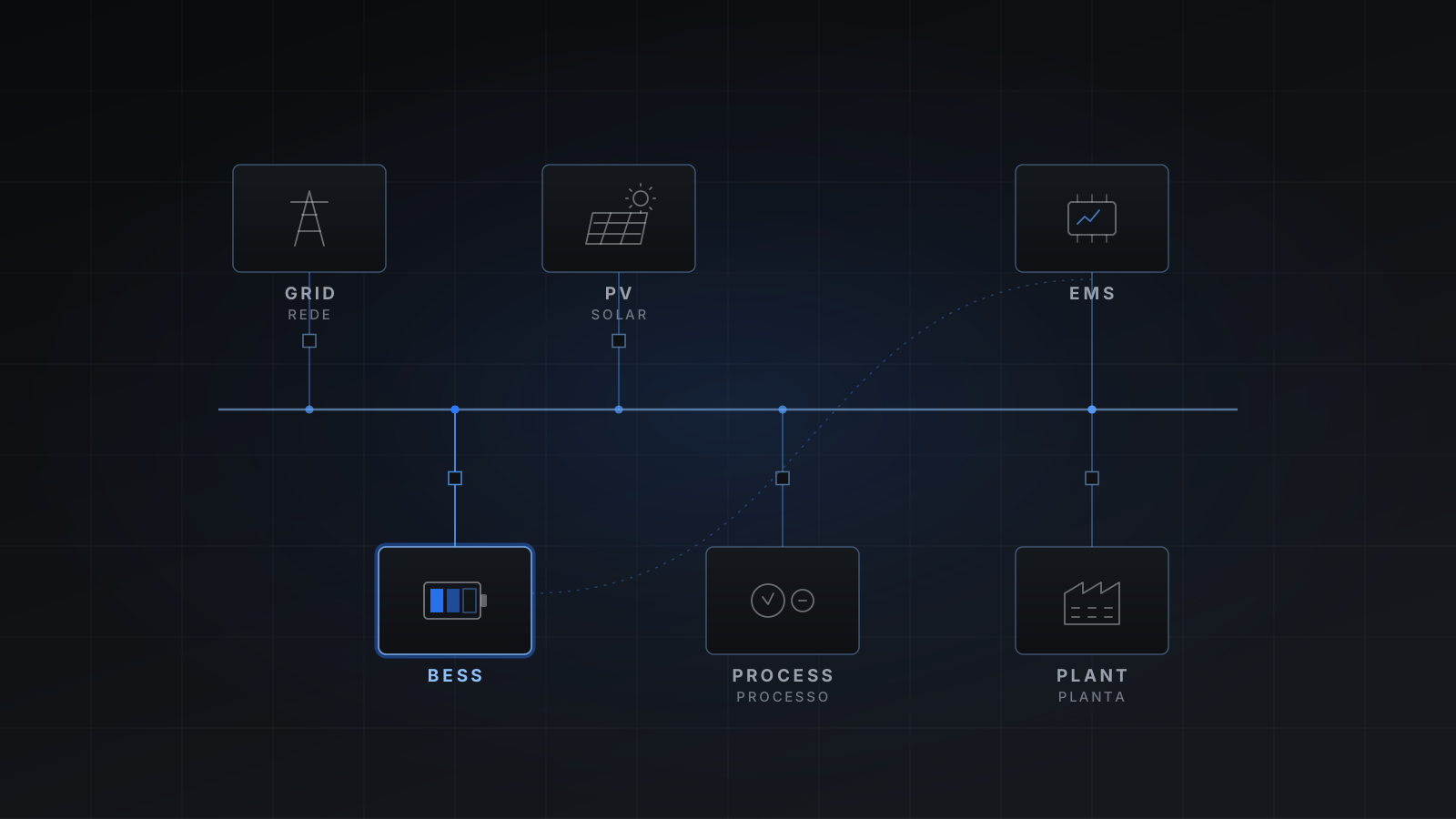
Simplified one-line diagram. Final architecture is engineered per site.
Products Used
Navvion systems for this solution.
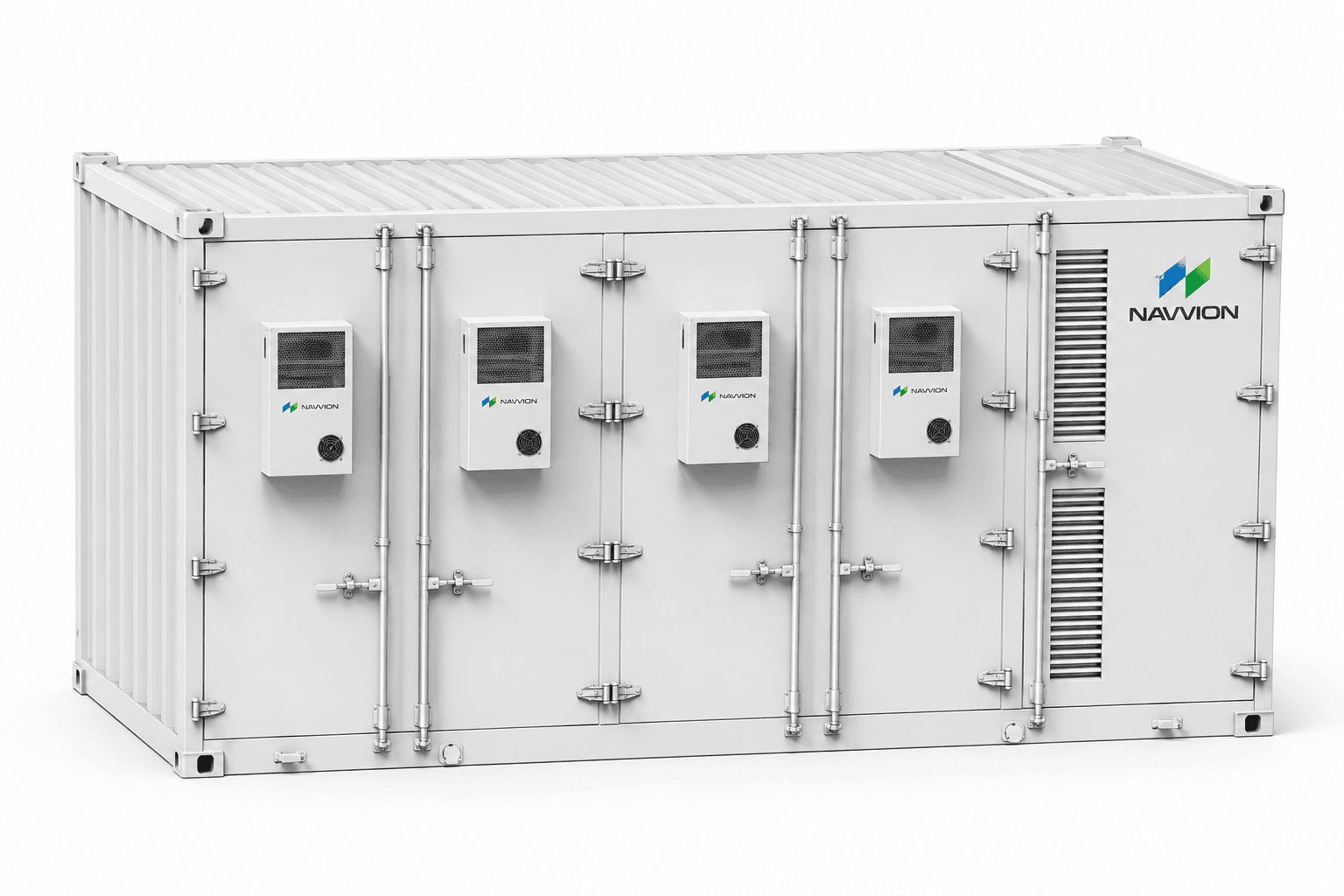
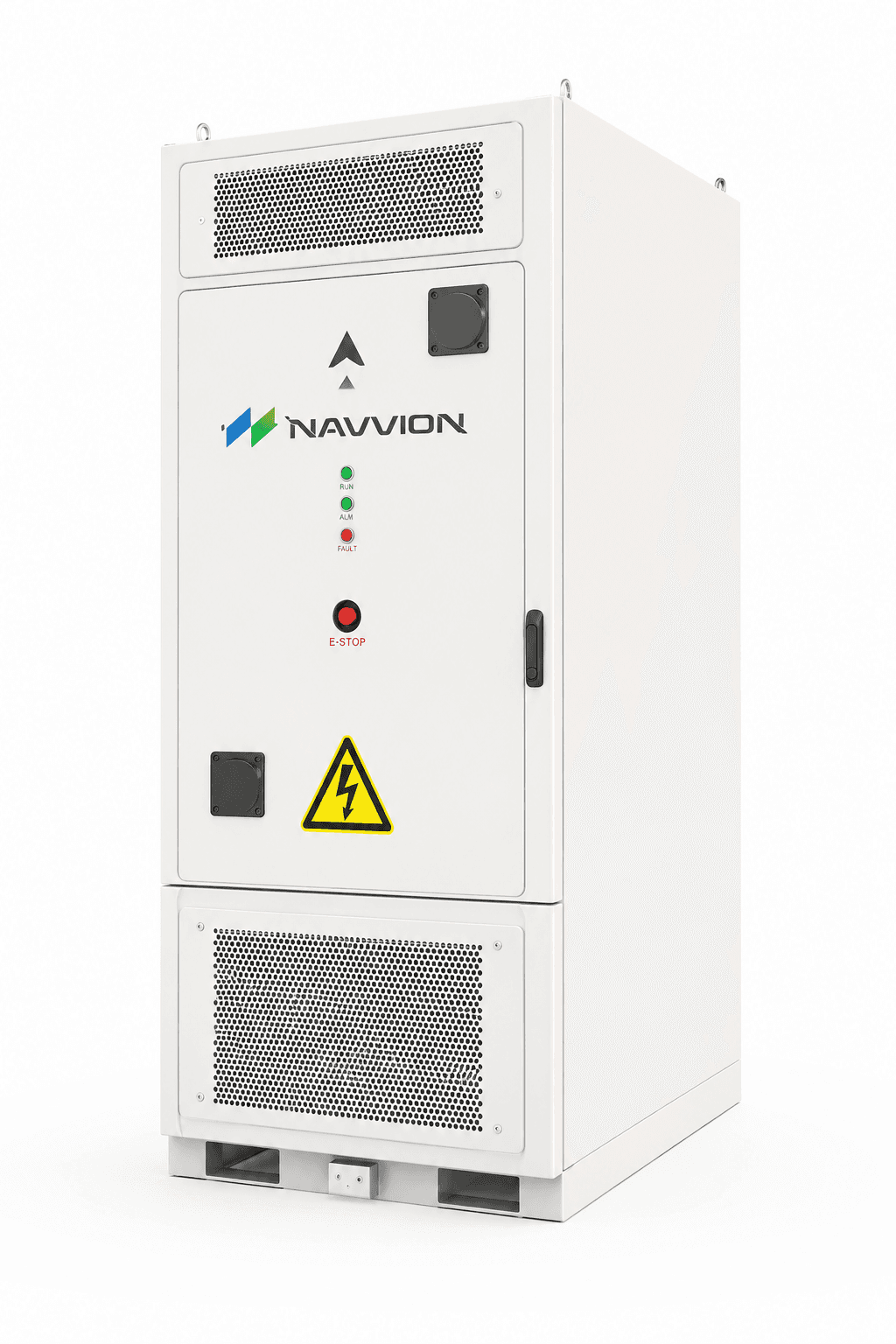
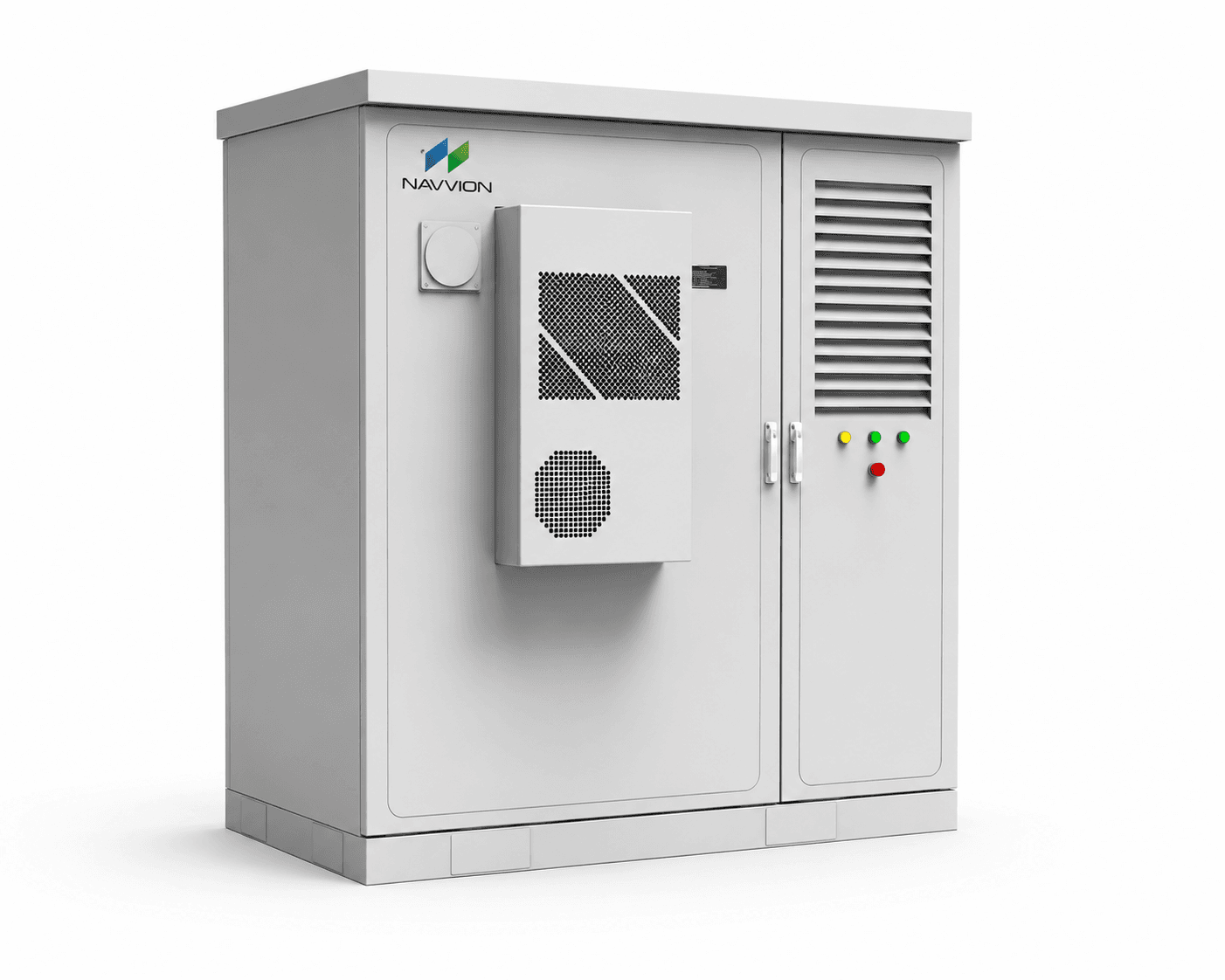
Containerized systems anchor plant-level deployments; Navvion Beta and Omega cabinets serve individual buildings and staged rollouts across a campus.
- Audit
- Sizing
- EMS strategy
- Commissioning
Economics
What the payback looks like.
| Battery size | 500 kWh / 250 kW |
| Installed cost | $420 / kWh |
| Incentive / tax credit | 10% of CAPEX |
| Demand charge | $20 / kW-mo |
| Monthly peak reduction | 200 kW |
| Energy shifting | 1 cycle/day @ $0.05/kWh |
| Net installed cost | $189,000 |
| Demand-charge savings | $48,000 / yr |
| Energy-shifting savings | $9,125 / yr |
| Simple payback | 3.3 years |
| 20-year net return | $953,500 |
Illustrative scenario using the default assumptions from our ROI calculator. We model real savings against your actual tariff and load profile.
Run your numbersFAQ
Common questions.
Can storage be deployed without stopping production?
Yes — the tie-in is scheduled into a planned maintenance window; everything before that point is installed and tested without touching the process bus.
We run multiple shifts — does that hurt the economics?
Flat, high-load-factor operations lean more on energy shifting and power quality than on peak shaving. The audit tells us which levers carry the return at your site.
How does the EMS coordinate with production schedules?
Dispatch windows are configured around your process calendar, and the APM software exposes overrides so operations always has the last word.
More Solutions
Explore related applications.
Let's model your project.
Send your load profile through the intake form and we'll respond with a sizing analysis.
What we need to start.
- Energy data
- Process load profile
- Existing equipment
- Roadmap