
Use Case · C&I + Utility
Solar + Storage
Capture excess solar production and improve on-site renewable utilization.
- DC + AC
- Coupling options
- Evening
- Peak shift
- Clipping
- Energy recovered
Outcomes
What this solution delivers.
Higher self-consumption
Store midday surplus instead of exporting it at low feed-in rates.
Recovered clipped energy
Capture DC energy the inverter would otherwise clip at its AC limit.
Evening peak coverage
Dispatch stored solar into the highest-tariff evening window.
Problem
Why this matters.
On most C&I sites the solar peak lands at midday while the demand peak lands in the evening, so a growing share of production is exported at low feed-in rates or clipped at the inverter's AC limit. Batteries close that mismatch by storing surplus and clipped energy for the evening.
On most C&I sites the solar peak lands at midday while the demand peak lands in the evening — so a growing share of production is exported at low feed-in rates or clipped at the inverter's AC limit. Storage closes that gap: the EMS charges from surplus and clipped DC energy, then discharges into the evening peak and smooths cloud transients. The same NavvionOS controller coordinates PV and battery as one asset.
Navvion Approach
How we deliver results.
Architecture
How the system fits together.
PV and battery couple either through a shared hybrid PCS (DC) or at the main AC bus. Midday surplus and inverter-clipped energy charge the battery; the EMS dispatches stored solar into the evening peak and smooths cloud transients.
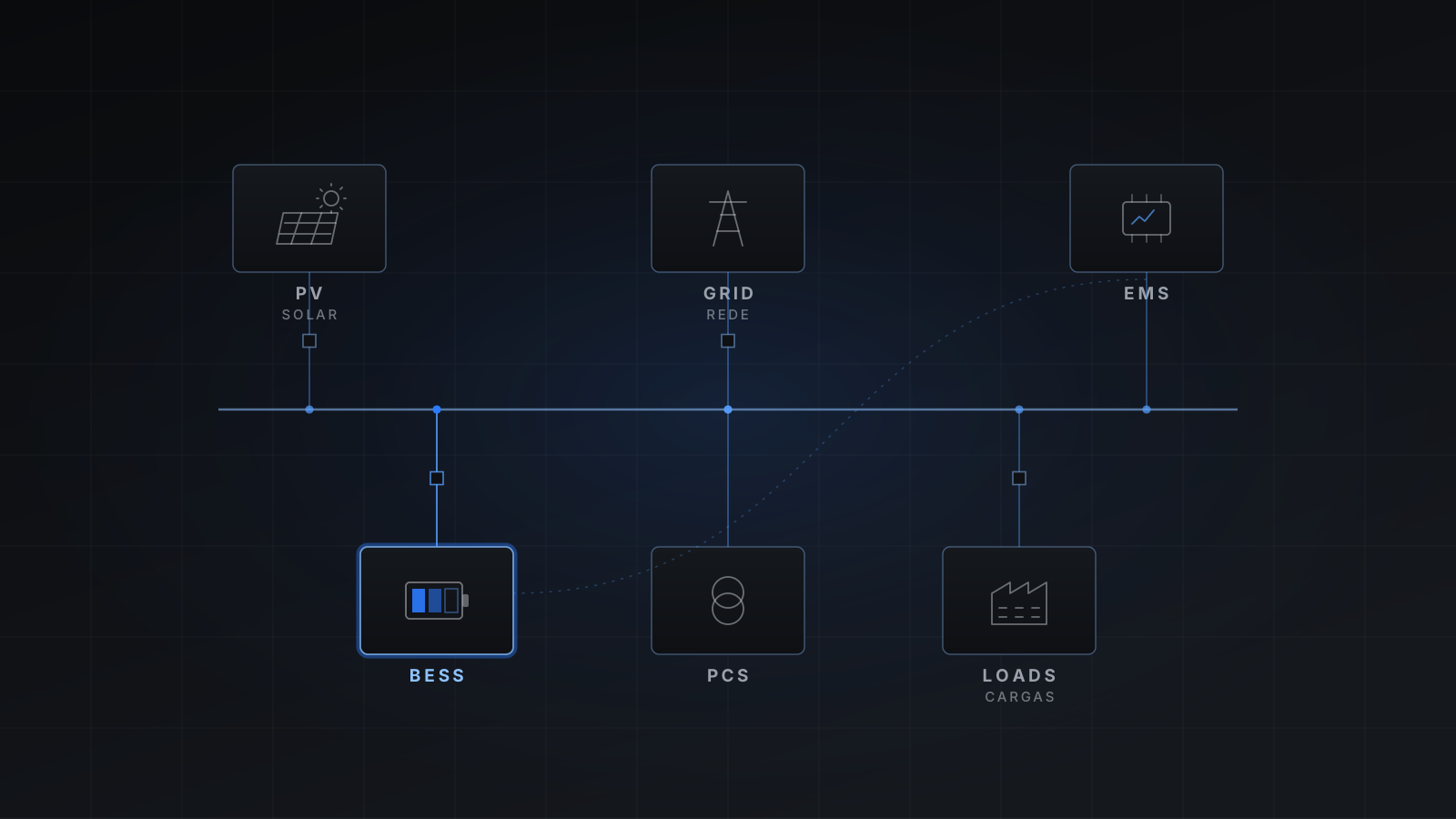
Simplified one-line diagram. Final architecture is engineered per site.
Products Used
Navvion systems for this solution.
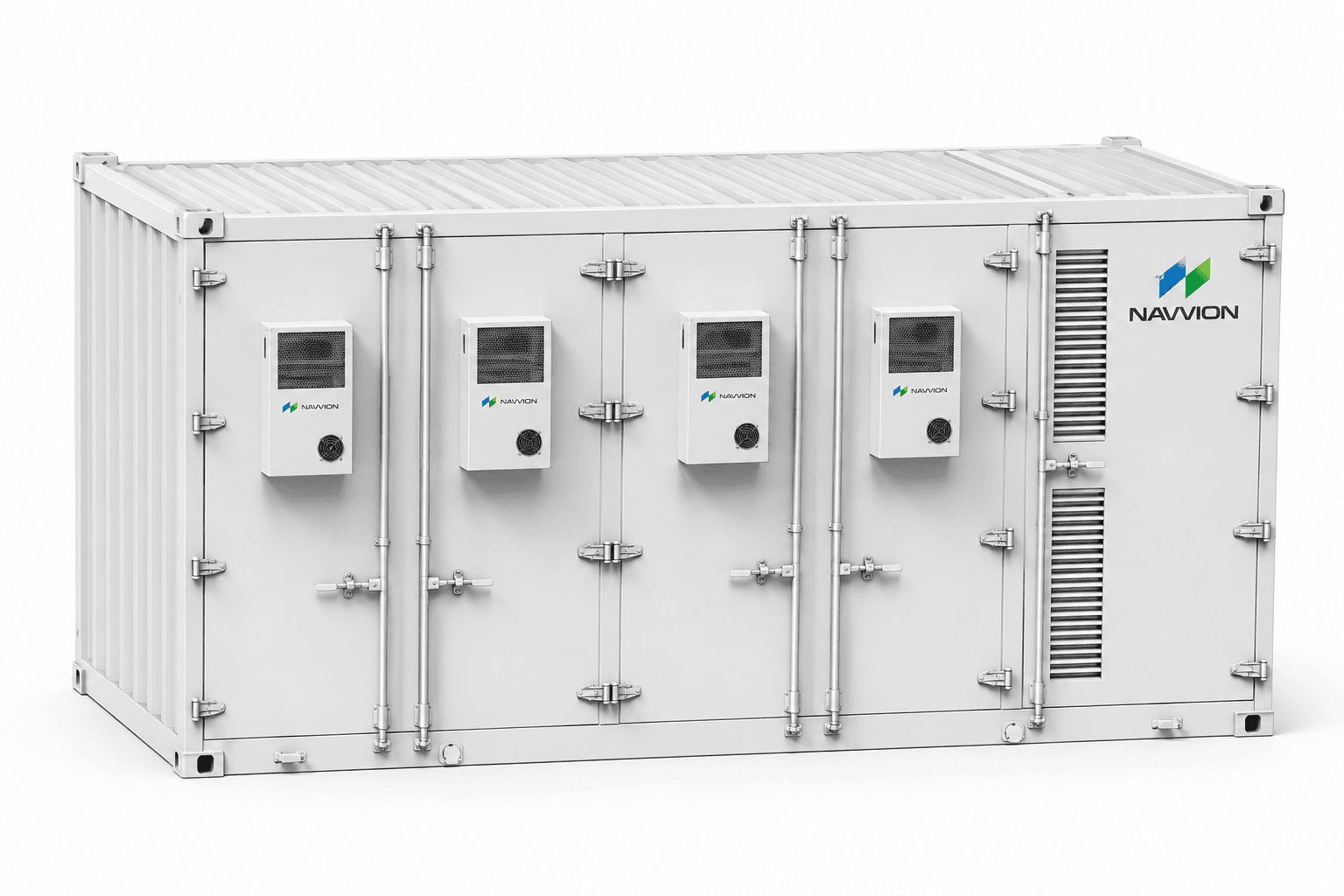
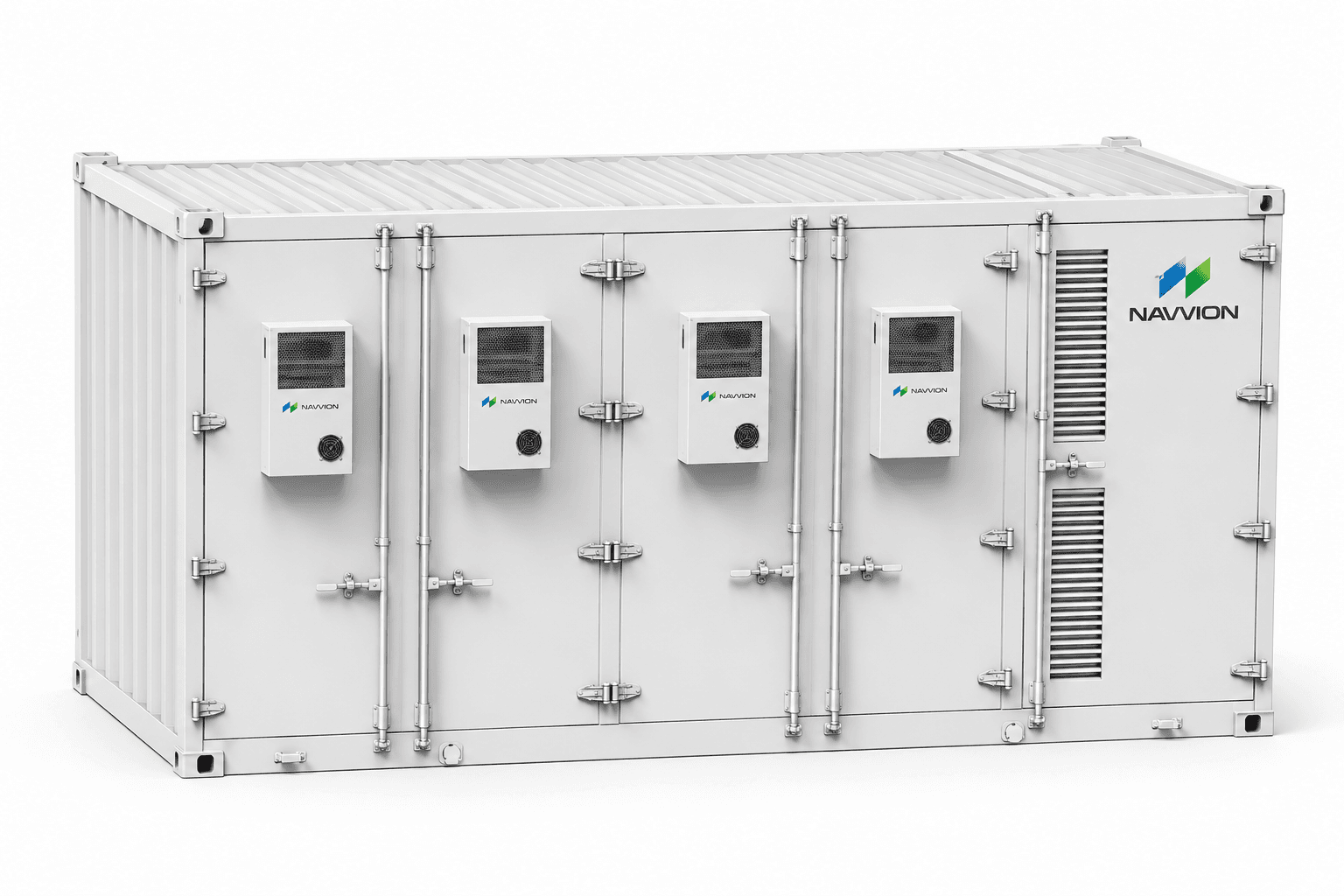
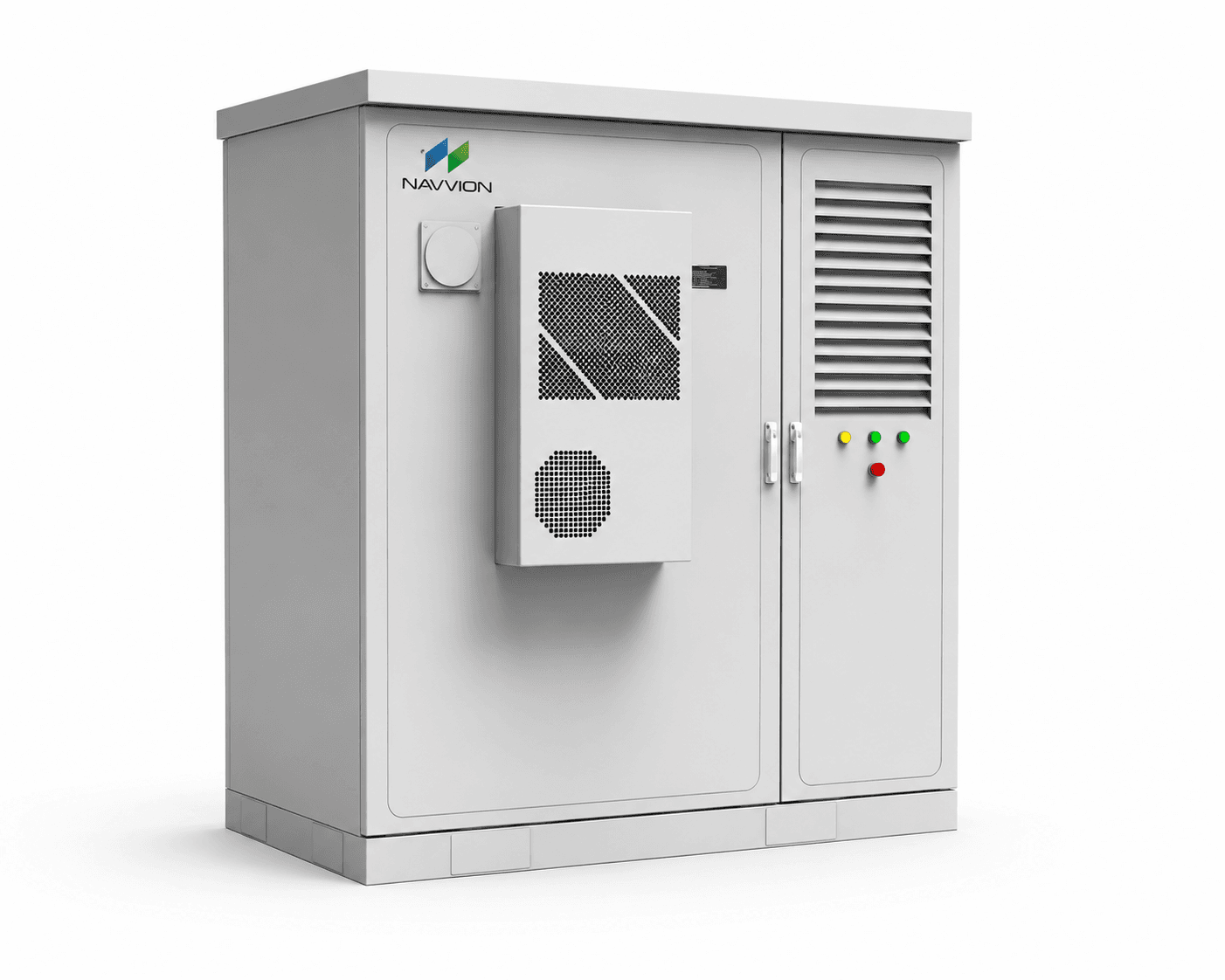
The Navvion Omega hybrid DC-couples directly with PV for new builds and retrofits; the 2 MWh-class Navvion Zeta containers AC-couple beside larger solar plants.
- System sizing
- PV integration
- EMS configuration
- APM onboarding
Economics
What the payback looks like.
| PV system size | 500 kWdc |
| DC/AC ratio | 1.3 |
| Battery size | 500 kWh / 250 kW |
| Installed cost | $420 / kWh |
| Incentive / tax credit | 10% of CAPEX |
| Clipped + surplus captured | ~180 MWh / yr |
| Retail vs feed-in spread | $0.12 / kWh |
| Net installed cost | $189,000 |
| Self-consumption uplift | +22 pts |
| Bill savings (energy) | $21,600 / yr |
| Simple payback | ~8.8 years |
| 20-year net return | $243,000 |
Illustrative scenario using the default assumptions from our ROI calculator. We model real savings against your actual tariff and load profile.
Run your numbersFAQ
Common questions.
AC-coupled or DC-coupled — which is right?
DC coupling captures clipped energy and suits new builds with a hybrid PCS; AC coupling is simpler to retrofit beside an existing inverter. We model both against your production data.
Can storage be added to a solar plant already in operation?
Yes — AC-coupled retrofit is the standard path. The main checks are interconnection headroom, available space, and how the existing inverter is controlled.
How much clipped energy is really recoverable?
It depends on your DC/AC ratio and irradiance profile. We quantify it from actual inverter production data before sizing anything.
Does storage change my feed-in / net-metering compensation?
We model self-consumption versus export value from your local tariff. Storage typically shifts value away from low-rate export toward on-site use — and the model shows the crossover point for your specific rates, so you see exactly where storing beats exporting.
How big should the battery be relative to the array?
There is no fixed ratio. We size the battery from the overlap between your production and load curves, modeled from 12 months of inverter and load data, so it captures the surplus you actually have without oversizing.
More Solutions
Explore related applications.
Let's model your project.
Send your load profile through the intake form and we'll respond with a sizing analysis.
What we need to start.
- Solar production data
- Load profile
- Inverter spec
- Tariff structure