
Industry
Data Centers
Storage upstream of the UPS for power quality, managed capacity, generator-start bridging, and demand-response revenue — without touching the IT bus.
Problem
Why this matters.
Data centers demand rock-solid uptime, run a flat and relentless load with little daily peak to shave, and increasingly need to participate in grid programs. Storage adds resilience and a new revenue path without adding uptime risk.
Load factors above 80% mean the storage case is different here — the value is minutes-to-hours of bridge energy beyond the UPS, managed capacity during grid stress, and a path into demand-response revenue, all bounded by a resilience reserve tied to the facility's tier target.
Navvion Approach
How we deliver results.
Architecture
How the system fits together.
The BESS connects upstream of the UPS at the facility bus. The UPS keeps the millisecond domain while the BESS covers minutes to hours — peak management, grid-program dispatch, and generator-start bridging — coordinated but independent from IT distribution.
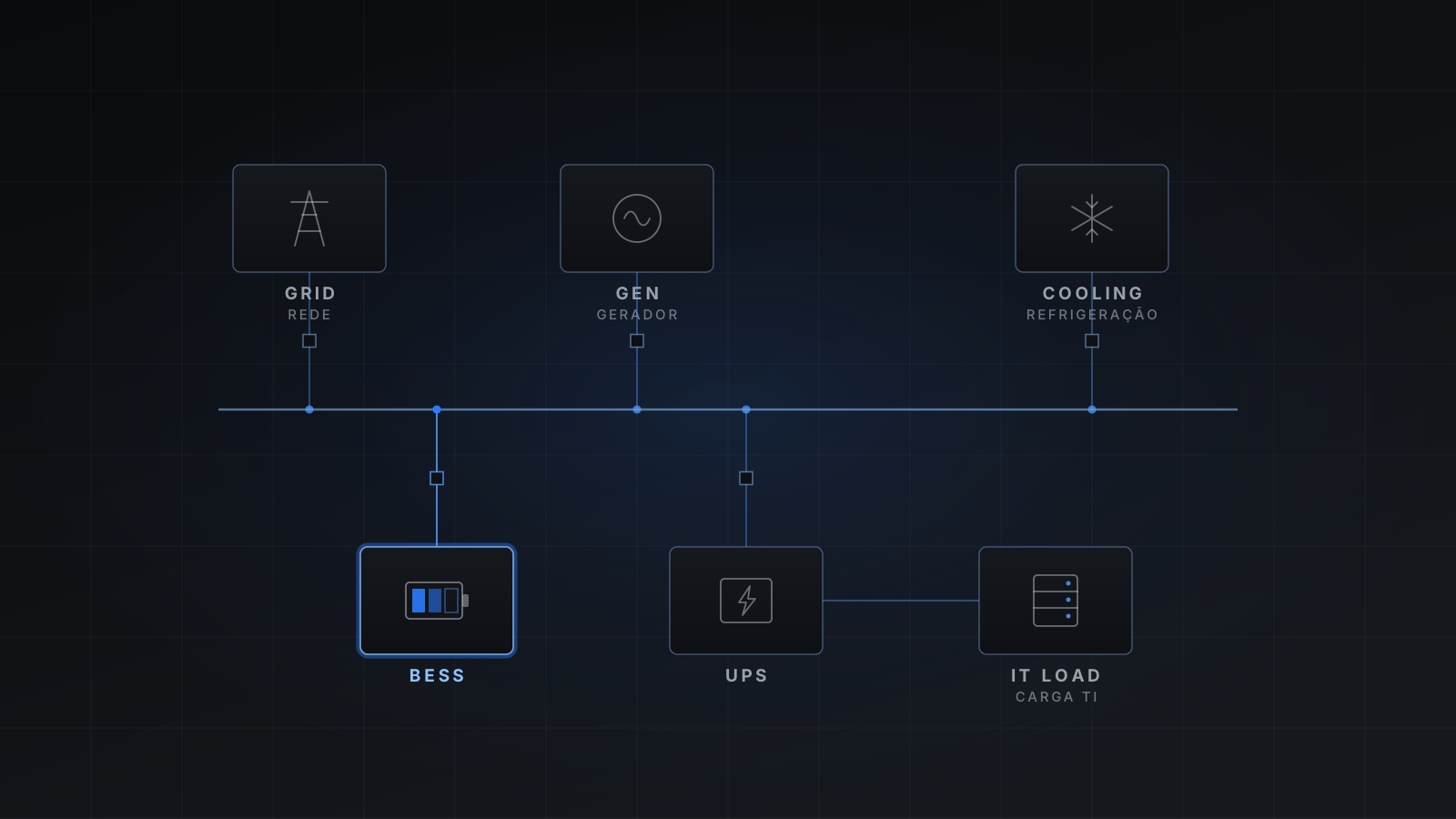
Simplified one-line diagram. Final architecture is engineered per site.
Products Used
Navvion systems for this solution.
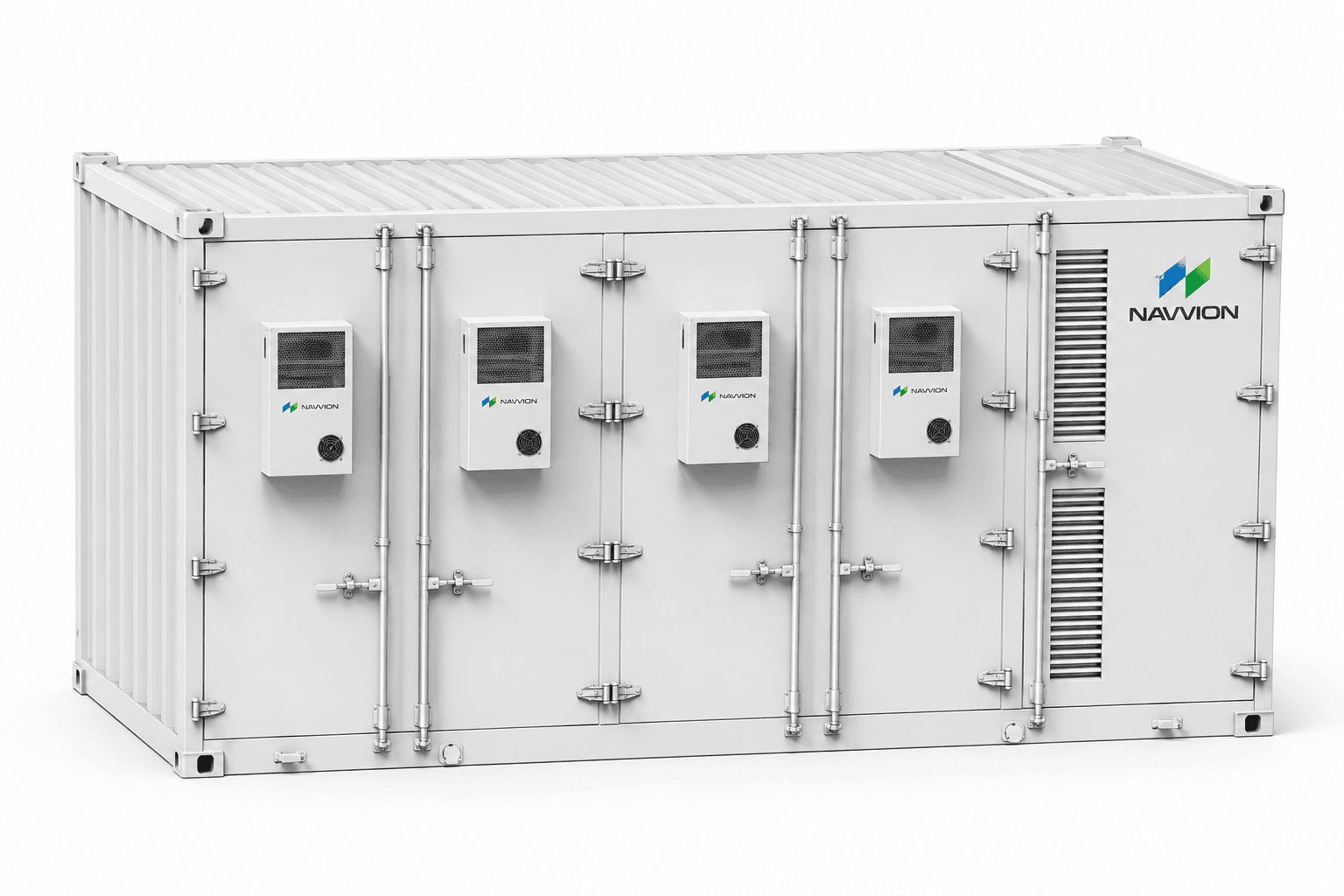
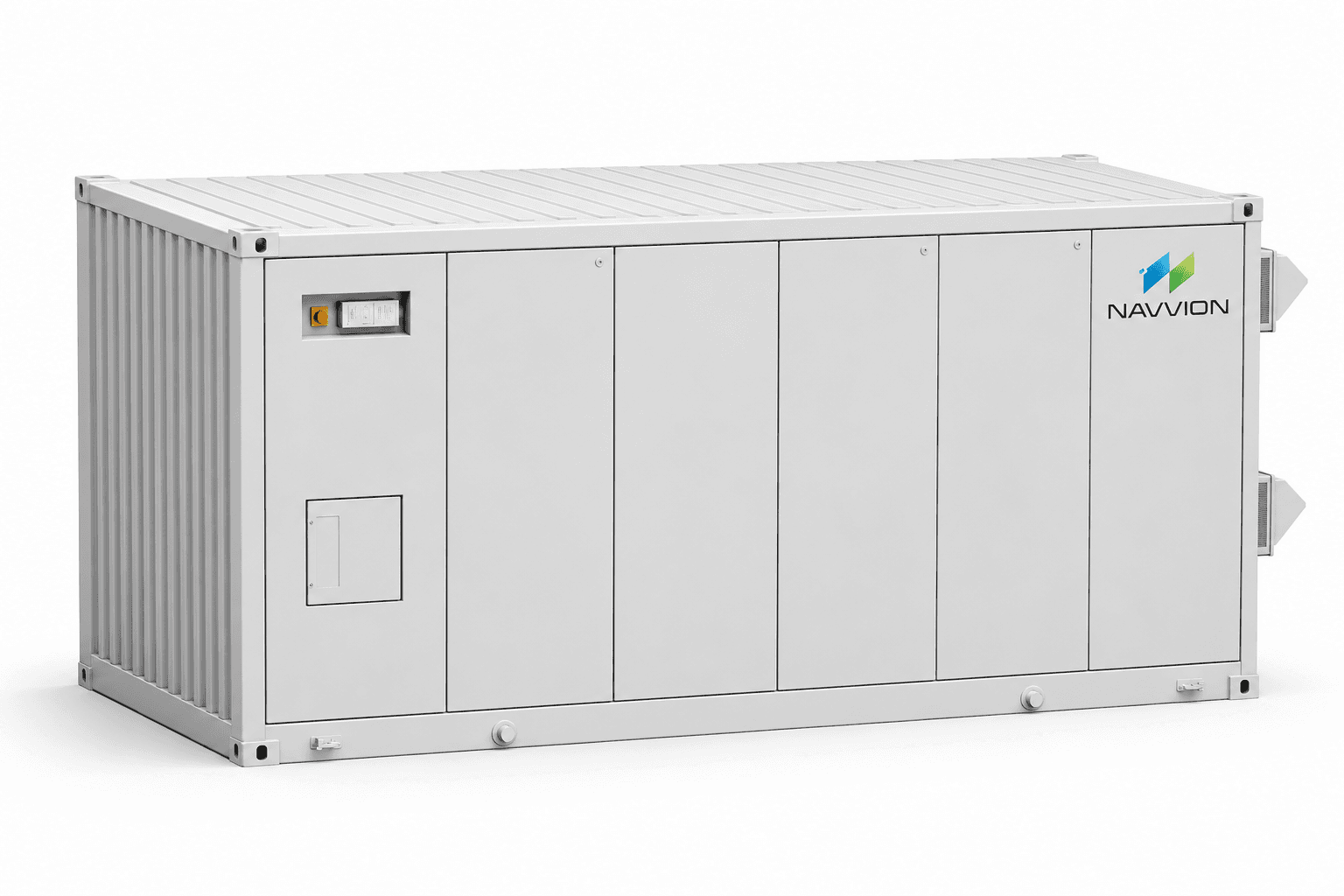
The 2.6 MWh Navvion Epsilon (ESS-C-20-2612A-L1-2H) fits per-hall deployments; the 3.3 MWh all-in-one Navvion Delta (ESS-C-20-3343A-L1-2H) with string PCS and cluster management scales campus-level capacity.
- Design and engineering
- Integration with UPS and generators
- Commissioning
- Grid-program enrollment support
- Fleet APM monitoring
- Long-term service
Economics
What the payback looks like.
| Building block | 2 MWh / 1 MW containerized |
| Installed cost | $420 / kWh |
| Utilization | 0.5 cycles/day (flat load) |
| Managed-energy spread | $0.04 / kWh |
| Resilience reserve | Held to tier target |
| Installed cost (2 MWh block) | $840,000 |
| Managed-energy value | $14,600 / yr |
| Demand-response + capacity revenue | Program-specific |
| Generator-runtime reduction | Site-specific |
| Simple payback | Modeled per program mix |
Illustrative scenario using the default assumptions from our ROI calculator. We model real savings against your actual tariff and load profile.
Run your numbersFAQ
Common questions.
Does the BESS replace our UPS?
No. The UPS keeps owning the millisecond domain; the BESS sits upstream and owns minutes to hours. The two are coordinated but independent.
Can we join demand-response programs without uptime risk?
Yes — dispatch limits are configured so grid-program participation never draws below the resilience reserve your tier target requires.
How does this affect our generator strategy?
The battery bridges the generator-start gap cleanly and can reduce generator runtime hours; it typically complements rather than replaces the generator fleet.
What tier / redundancy assumptions do you design to?
Dispatch limits and the resilience reserve are configured to your tier target, so grid-program participation never draws below the backup the facility requires.
How does the BESS coordinate with our UPS and generators?
It sits upstream of the UPS and is coordinated but independent — the UPS owns milliseconds, the BESS owns minutes-to-hours and bridges the generator-start gap cleanly.
Which NavvionOS software runs a data-center deployment?
APM for asset performance, Cloud Monitoring and Remote Diagnostics for uptime visibility, and Fleet management for campus and portfolio scale.
More Solutions
Explore related applications.
Let's model your project.
Send your load profile through the intake form and we'll respond with a sizing analysis.
What we need to start.
- Tier classification / redundancy target
- Facility load profile (interval data)
- UPS and generator scheme
- Tariff structure
- Available grid / demand-response programs
- Resilience reserve requirement